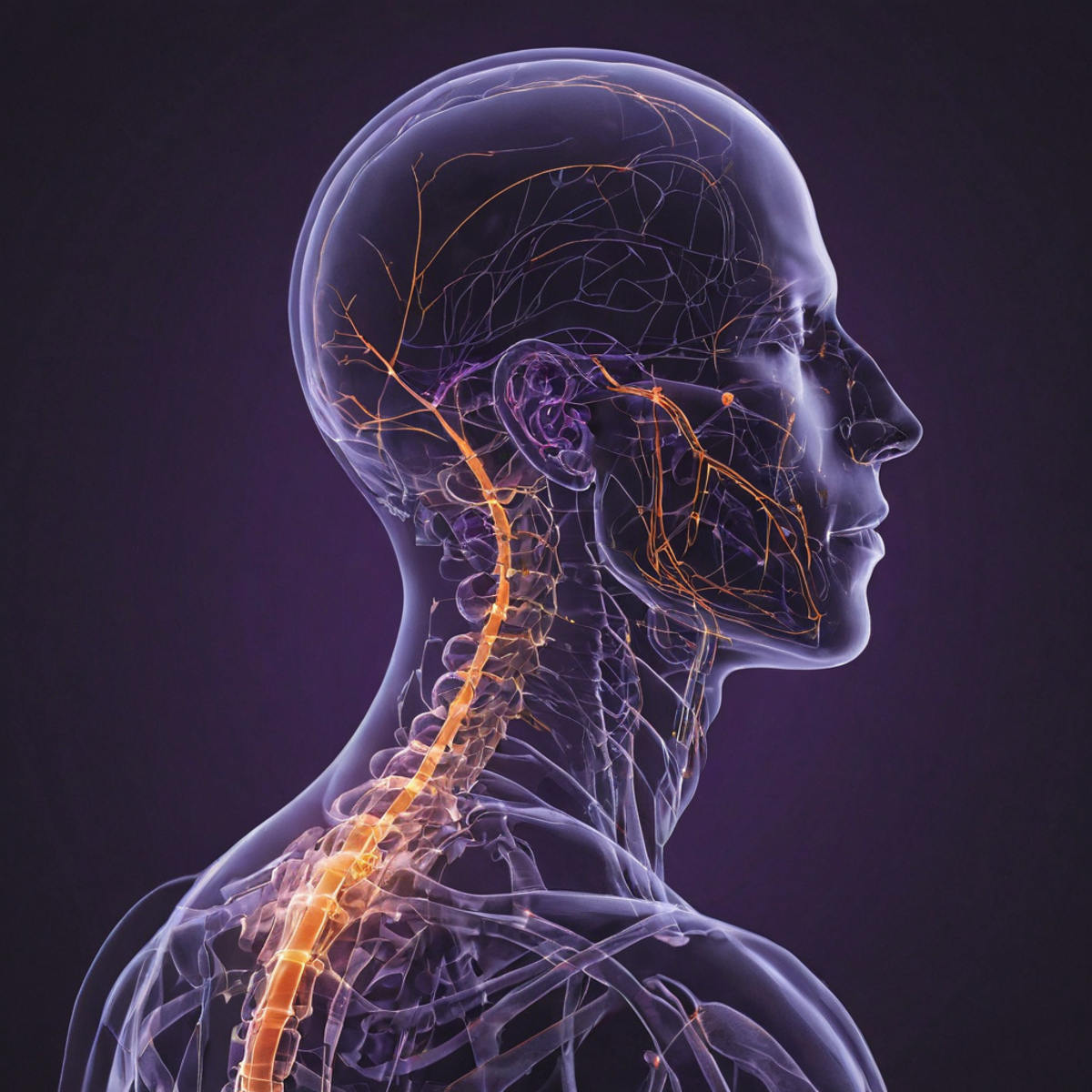
Forward head posture (FHP) is the most common postural fault of the cervical spine in the sagittal plane — and it is found, to varying degrees, in almost everyone who spends long hours at a desk or looking at a screen. But how much does it actually matter? Is it just a cosmetic concern, or is there real evidence linking it to neck pain?
In this guide, we break down what the scientific literature says about forward head posture, how it is measured, whether it is associated with neck pain, and which exercises have been shown to help in randomized controlled trials.
What is forward head posture?
Forward head posture describes a position where the head sits in front of the body's vertical axis, rather than balanced directly over the shoulders. Clinically, researchers measure it using the craniovertebral angle (CVA) — the angle formed between a line from the seventh cervical vertebra (C7) to the tragus of the ear, and the horizontal plane.
A smaller craniovertebral angle indicates a more forward head position. In practice, a CVA below roughly 50 degrees is commonly used as a threshold for classifying forward head posture, though exact cut-offs vary across studies.
What the research says: FHP and neck pain
The most direct evidence comes from a 2019 systematic review and meta-analysis published in Current Reviews in Musculoskeletal Medicine, which pooled data from 15 cross-sectional studies on the relationship between forward head posture and neck pain.
In plain terms: the more forward the head, the higher the reported neck pain intensity and disability. This association was consistent in adults and older adults. Interestingly, the picture was less clear in adolescents, where the relationship was weaker and more variable — a reminder that posture is not the only factor, and that age and other variables matter.
Why forward head posture matters biomechanically
The head weighs roughly 4.5–5 kg (about 10–11 lb). When it is balanced over the spine, the neck muscles and ligaments support it efficiently. But as the head moves forward, the effective load on the cervical spine increases dramatically.
Biomechanical modeling work has estimated that for every inch the head moves forward, the load on the cervical spine can increase by roughly 4.5 kg (about 10 lb) — and at significant forward displacement, the effective load can rise to several times the head's resting weight. This increased demand on the posterior neck muscles and soft tissues is one proposed mechanism linking forward head posture to strain, fatigue, and pain.
Evidence-based exercises for forward head posture
The good news is that targeted exercise has been shown to improve both posture and pain. A 2024 randomized clinical trial published in BMC Musculoskeletal Disorders compared two approaches in people with nonspecific neck pain and forward head posture: neck stabilization exercises and neck dynamic exercises.
This is an encouraging result: it suggests that consistent, structured exercise — whether focused on stabilization or dynamic movement — can meaningfully improve forward head posture and reduce neck pain. The key variable was not the specific technique, but regular, guided practice.
Exercises commonly used in the research
- Chin tucks — gently draw the head back to align the ears over the shoulders, strengthening the deep neck flexors.
- Neck stabilization — isometric holds that train the deep cervical muscles to support the head in a neutral position.
- Dynamic neck movements — controlled flexion, extension, and rotation to improve range of motion.
- Upper back strengthening — rows and scapular work to counter the forward-rounded pattern.
The takeaway from the research is clear: consistency beats intensity. Short, daily, guided sessions are more effective than occasional long workouts — which is exactly the structure a 21-day guided program provides.
How Posturist helps
Posturist turns this evidence into a practical, structured 21-day program. Each day includes guided exercises with clear instructions, timers, and rep tracking — so you build the consistent practice the research shows works, without guessing what to do or how long to hold it.
Start your 21-day posture program
Guided daily workouts, no equipment needed, progress tracking built in.
References
- Mahmoud NF, Hassan KA, Abdelmajeed SF, Moustafa IM, Silva AG. The Relationship Between Forward Head Posture and Neck Pain: a Systematic Review and Meta-Analysis. Current Reviews in Musculoskeletal Medicine. 2019;12(4):562–577. PMC6942109
- Randomized clinical trial comparing neck stabilization versus dynamic exercises for nonspecific neck pain with forward head posture. BMC Musculoskeletal Disorders. 2024. PMC11373259
This article is for educational purposes and is not a substitute for professional medical advice. If you experience persistent or severe pain, consult a qualified healthcare professional.